
Last updated November 15, 2026
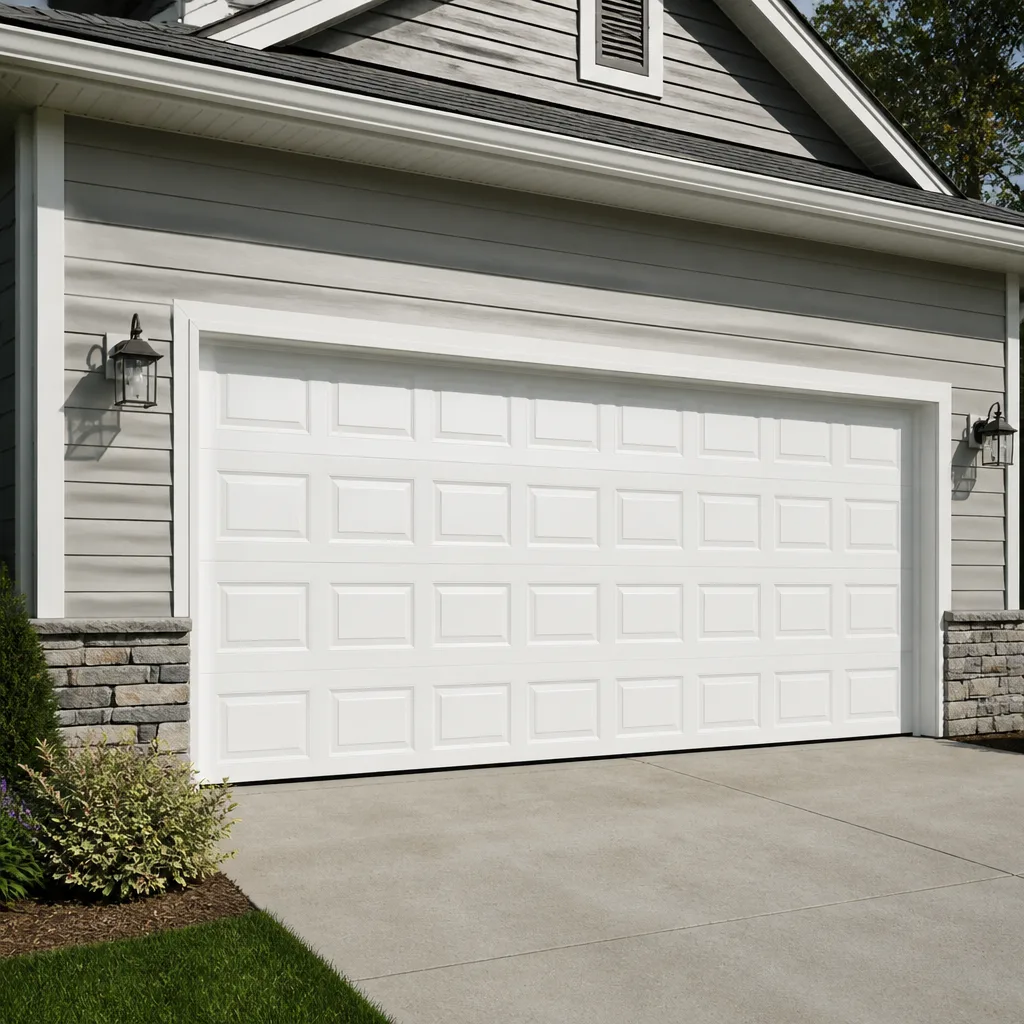 Raised-panel steel
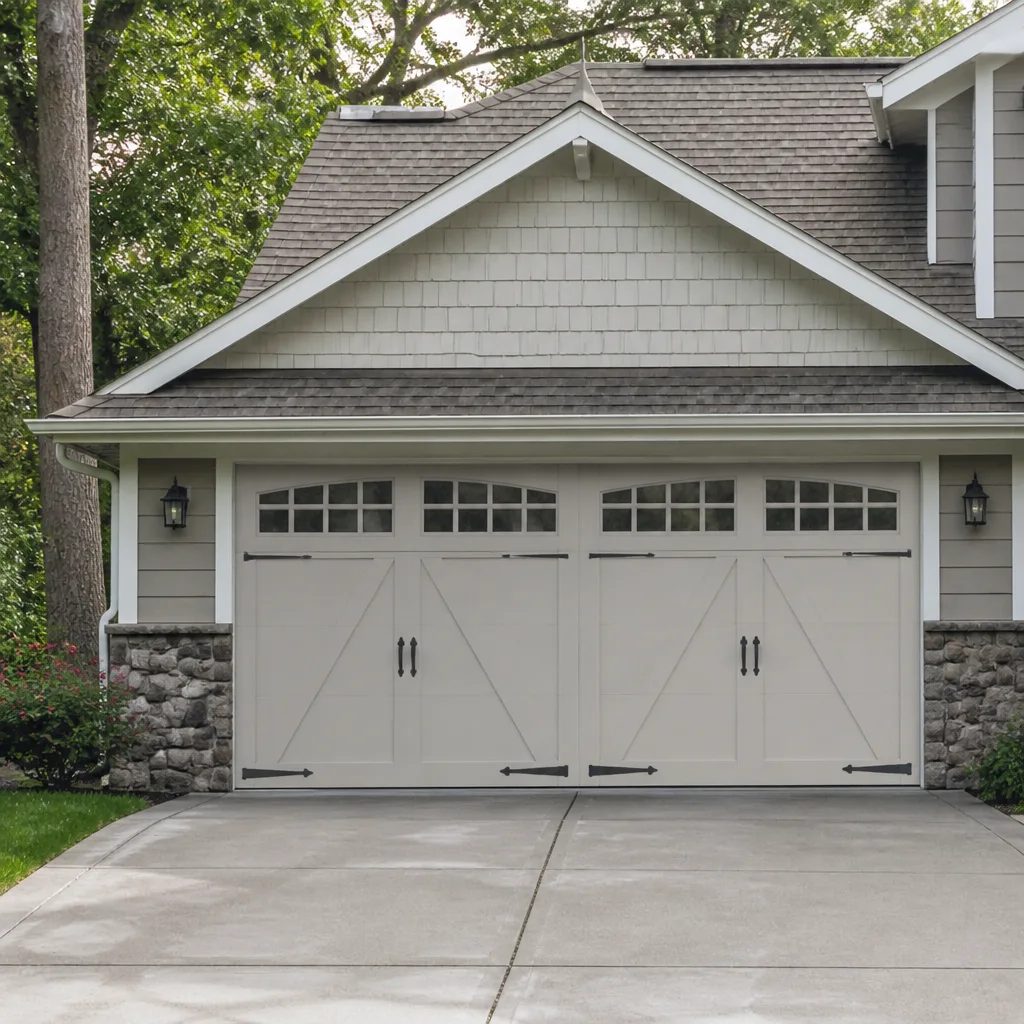 Carriage house
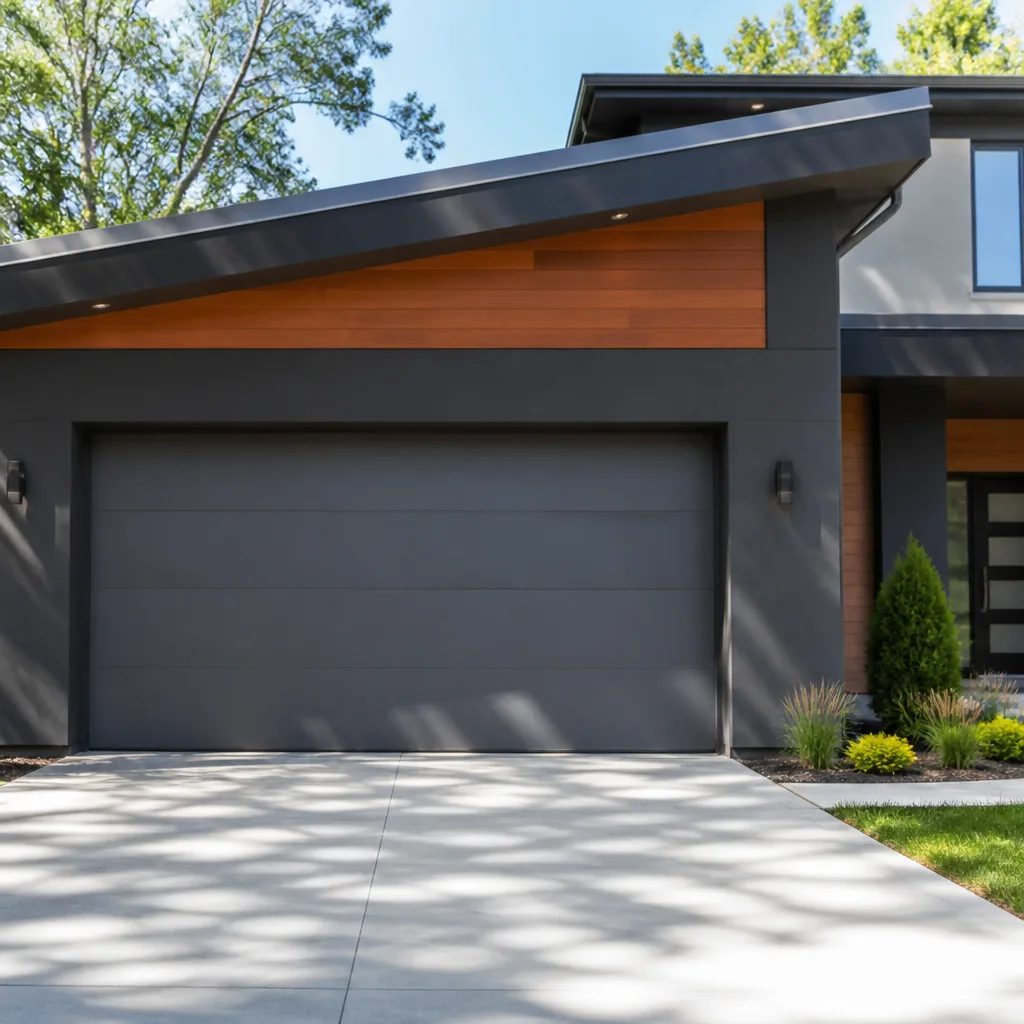 Modern flush
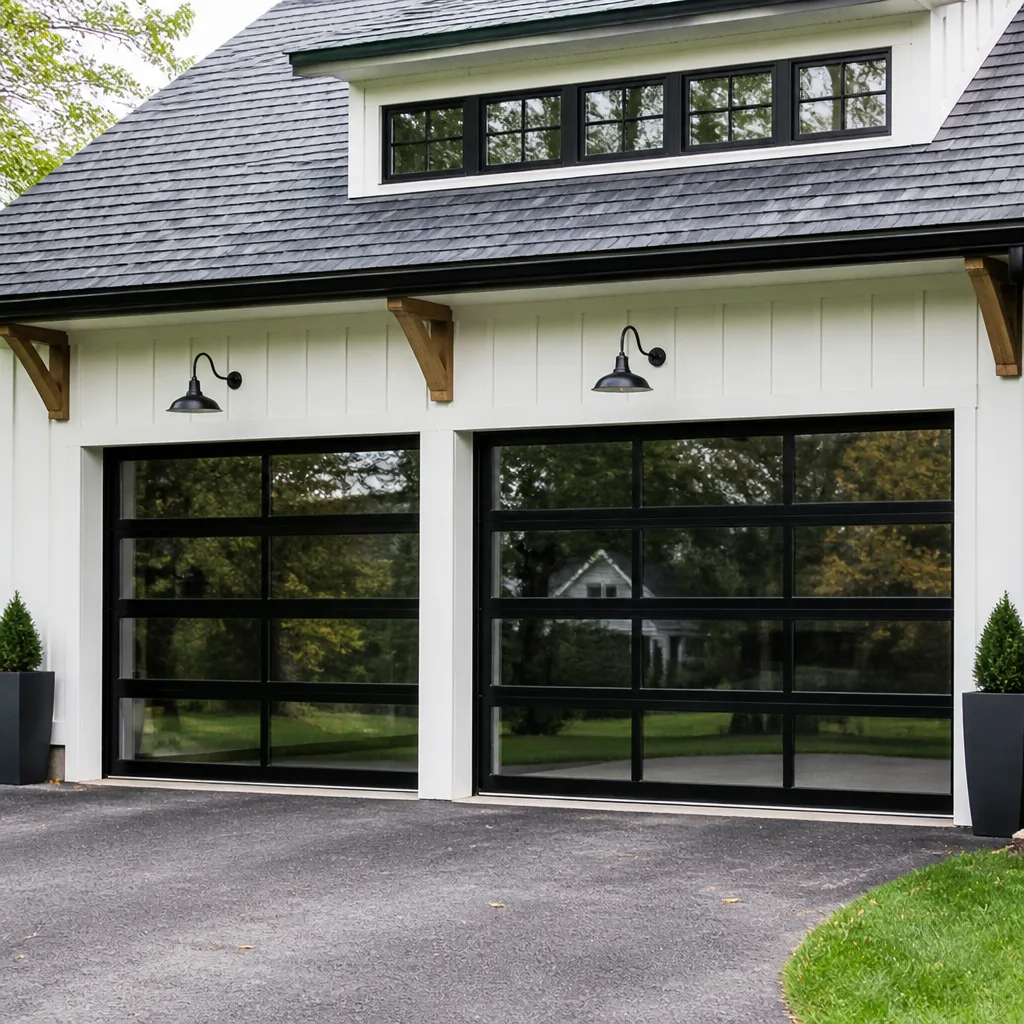 Full-view glass
 LiftMaster openers
 Chamberlain openers
Full 25-point door and opener safety check with every visit - springs, cables, rollers, tracks, and your LiftMaster or Chamberlain opener included
You get a price before we start. It does not change when the pro arrives.
Get your free estimateGarage Door Cost Breakdown: The Everett Homeowner’s Reference for 2026
The gap between a $900 garage door job and a $2,800 one usually has nothing to do with the door itself. It comes down to what a technician finds after pulling the old panels: a spring sized wrong for the new door’s weight, an undersized header that needs reinforcement, or an opener that can’t lift what’s replacing the old panel. Homeowners in Everett shop on the sticker price and get surprised by the follow-up work. This guide works the other direction. Instead of one giant range, we break every number into a component you can actually budget against. You’ll see what panels, springs, cables, openers, and labor cost separately, which variables move the total most in Everett homes, and how to read a quote line by line instead of comparing totals.
Quick Answer
Garage door replacement in Everett typically runs $1,200 to $2,800 for a single-car door and $2,200 to $4,500 for a double door, installed, depending on material, insulation, and brand tier. A straight repair like a broken spring or cable usually lands between $180 and $420. The written estimate you receive after an on-site measure sets the final price, and it should be agreed before any work starts.
Styles & brands we work with
- Raised-panel steel
- Carriage house
- Modern flush
- Full-view glass
- LiftMaster openers
- Chamberlain openers
Table of Contents
- What each garage door component actually costs
- The variables that move Everett costs the most
- Brand tiers: where the premium is worth it
- Hidden cost triggers in Everett installs
- How to read a quote using line-item benchmarks
- Repair or replace: the break-even math
- Opener costs and why they vary
- Labor, timeline, and what a typical install day looks like
What Each Garage Door Component Actually Costs
A garage door isn’t a single product. It’s a stack of parts that each carry their own price, and knowing the pieces is what makes a quote readable. Here’s how the line items typically break down for residential work in Everett.
- Door panels (single-car): $550 to $1,400 depending on steel gauge, insulation, and window options
- Door panels (double-car): $1,000 to $2,400 for the same material range
- Springs: $180 to $340 per spring; a matched pair is usually replaced together, so budget about twice that for a pair
- Cables: $120 to $220 for a pair, including tensioning
- Rollers and hinges: $90 to $180 for a full set on a standard residential door
- Tracks: $180 to $400 for a straight or curved track section, more if the configuration is unusual
- Opener (unit only): $180 to $550 depending on chain, belt, screw drive, or smart-home features
- Opener installation labor: $150 to $350
- Door installation labor: $350 to $700 for a standard single door, more for double doors or tricky openings
Stack the components and you’ll see why a single door lands around $1,200 to $2,800 installed. The labor piece isn’t a markup, it’s the sequence that matters. Removing a door, checking the header, shimming the tracks, balancing the springs, and dialing in the opener is a half-day of work for two technicians on a straightforward job. When homeowners ask us why a quote seems high, the answer is almost always in the components, not the panels. Every estimate we write is quoted and agreed before we start, so the numbers on paper are the numbers you’re paying.
The Variables That Move Everett Costs the Most
Two identical doors installed in two different homes in Everett can differ by $600 or more. The spread comes from a handful of variables, and the first three account for most of it.
- Single versus double door. A double door is roughly 1.7 times the panel cost of a single, not double, because the hardware is shared. The labor, though, is closer to 1.4 times. A double is usually the better value per square foot.
- Insulation rating. An uninsulated steel door is the least expensive option. A door with a polyurethane core and a thermal break costs $300 to $700 more. In an Everett home where the garage sits under living space or shares a wall with the house, that gap pays back over time in comfort.
- Existing header condition. The wooden beam above the opening has to carry the door’s weight. If it’s undersized, rotted, or was never reinforced for a heavier door, that’s an added repair before installation begins. We can’t tell from a photo, which is why a free on-site measure matters.
- Opening dimensions. Non-standard openings require custom panels and take longer to install.
- Old door disposal. Hauling away the old door adds a modest line item to most quotes.
- Opener compatibility. If your existing opener isn’t rated for the new door’s weight, it has to be replaced or upgraded. An opener that strains under a heavier door wears out faster.
Everett’s climate adds a small wrinkle. Damp winters mean wooden frames and headers see more moisture, and worn weather seals let water creep behind the trim. A technician who checks the perimeter during the measure catches those issues before they turn into a call back in February. That’s the kind of thing a phone quote can’t capture, and it’s why the written estimate after the visit is the number we stand behind.
Brand Tiers: Where the Premium Is Worth It and Where It Isn’t
Brand-tier pricing is one of the hardest things to compare because every manufacturer uses different model names and every installer quotes differently. Here’s how we talk about it with homeowners.
Entry tier
Standard steel panel doors from well-known makers sit at the bottom of the range. These are the $1,200 to $1,600 single-door installs. Most homeowners doing a straightforward replacement of a plain door are well served here. Craftsman and Wayne Dalton both make products in this range, and knowing their lines is part of the job.
Mid tier
Add insulation, sturdier hardware, and a cleaner finish, and you’re in the $1,600 to $2,200 band for single doors. This is where most Everett homeowners land. The gains are real: quieter operation, better thermal performance, and hardware that lasts longer. Whether they’re worth the extra $400 to $600 depends on the home. A garage attached to living space almost always justifies the mid tier.
Upper tier
Premium steel, carriage-house styling, or wood-look designs land between $2,200 and $2,800 for a single door. The cost is in the finish, the insulation, and the visual curb appeal. On a home where the garage faces the street, the payoff is aesthetic. Where the premium isn’t worth it: a door on a detached garage that never sees weather, or a rental property where the plain door matches the tenant’s expectations.
Amarr and Raynor both produce doors across these tiers, which is why brand-agnostic recommendations matter. Our technicians recommend based on your door opening, your home, and how you use the garage, not what’s easiest to order. “Your brand. Our expertise” is the principle, but the door you end up with should be the right door for your house, not the right door for the warehouse.
Hidden Cost Triggers in Everett Installs
The phrase “hidden cost” gets thrown around a lot, but on garage doors, the surprises are consistent and predictable. These are the items that turn a $1,400 quote into a $2,100 one, and they show up in a specific pattern in Everett homes.
- Undersized or rotted header. Common in older homes where the header was framed for a lighter original door. Reinforcement or replacement adds real cost.
- Spring size mismatch. A new, heavier door needs springs rated for its exact weight. Wrong-size springs fail early, and replacing them adds $180 to $340 per spring.
- Track alignment issues. Framing that has settled can leave the tracks slightly out of plumb, requiring new brackets or a modified track layout.
- Electrical for a new opener. If the existing opener was wired in an awkward spot or the outlet isn’t where it needs to be, an electrician may need to be involved. This is a real cost, and it’s one reason we don’t give electrical advice ourselves.
- Weather seal and trim. Worn bottom seals and side trim need refreshing in a climate where wet winters drive moisture into gaps.
- Opener replacement. If the old opener can’t handle the new door’s weight, it fails as a safety issue. Better to plan for it than get caught after the door is up.
None of these are surprises if you know them in advance. All of them are the reason we insist on a free in-home measure before we quote. The written estimate accounts for what we find, and that estimate is what you agree to before work starts.
How to Read a Quote Using Line-Item Benchmarks
Comparing total prices across three quotes is the least useful thing you can do. A quote that totals $1,800 with five line items is not comparable to a quote that totals $1,800 with one line item, and it’s often not comparable to a $2,200 quote at all once you look inside. Here’s how to read what you’ve been handed.
- Find the panels. They should be listed with the model, gauge, and insulation. “Standard steel door” isn’t a line item; it’s a placeholder.
- Look for springs separately. You want to see the spring size, the count, and whether they’re rated for the door’s weight. Springs should be quoted as a pair if the door has two.
- Check the labor line. Labor should be a visible, itemized amount. A quote that bundles labor into the panel price hides the most variable cost on the job.
- Confirm what happens to the old door. Disposal should show up as a line or a stated inclusion.
- Note what’s excluded. Electrical work, header repair, and drywall patching are the three most common exclusions. A fair quote names them.
- Look for the spring safety line. Any written quote should mention spring replacement as a paired service if the door has two springs, and should never quote one spring price for a pair.
- Read the price statement. The quote should say the total is the price, subject to no additions without your approval.
If you do this with three quotes, the middle-priced one often turns out to be the fairest once the exclusions and components line up. When we prepare an estimate in Everett, we walk the homeowner through each line so there’s no mystery. That’s the standard we hold ourselves to, and it’s how we keep the conversation about the work rather than the invoice.
Repair or Replace: The Break-Even Math
The decision usually hinges on one question: is the door itself still sound? If it is, repair wins almost every time. If it isn’t, the cost of repairs stacks up against a replacement quickly.
When repair is clearly the right call
- One broken spring or cable on an otherwise functional door
- An opener that won’t respond to remotes but the door itself balances correctly
- A bent bottom section from a bump, where the rest of the door is intact
- Worn rollers or noisy operation that a tune-up resolves
When replacement starts to make sense
- Multiple panels are dented, warped, or rusted
- The door is out of balance and the hardware is worn throughout
- You’re replacing springs, cables, and an opener within the same year, and the door is older than its expected service life
- Insulation is nonexistent and the garage shares a wall with living space
A repair-first philosophy keeps costs honest. Our technicians assess before recommending replacement, and the written estimate reflects what’s actually needed. If a $250 spring repair gets your door working the way it should, that’s a better outcome than a $2,400 door you didn’t need. Where the math reverses is when the repair total approaches 50% of a new door’s installed cost, especially on a door that’s already showing wear at multiple points.
Opener Costs and Why They Vary So Much
Garage door openers are their own category of cost because the range is wider than the hardware suggests. A basic chain-drive unit and a smart-home belt drive both move a door, but the price span is $180 to $550 for the unit alone. Here’s what moves it.
- Drive type: Chain drive is the least expensive and the loudest. Belt drive costs more and runs quieter. Screw drive sits in the middle.
- Horsepower: Typical residential openers are rated for standard door weight. A heavier door needs a stronger unit.
- Smart-home features: Wi-Fi and app control add cost and, often, a separate subscription to a third-party service that isn’t ours to control.
- Battery backup: Useful in areas where power outages happen. It’s a modest upcharge.
- Brand compatibility: LiftMaster, Chamberlain, Genie, and Craftsman all use different remote frequencies, safety sensor setups, and wiring conventions. Replacing an opener is straightforward when the technician already knows the brand.
Opener repair is its own diagnostic category, separate from door repair. Motor failures, remote pairing issues, sensor misalignment, and smart-home integration problems all fall under the opener umbrella. When we handle garage door opener repair in Everett, we diagnose the unit rather than replace it by default. A $180 repair is a far better outcome than a $500 replacement, and we’ll say so when the diagnosis points that direction.
Labor, Timeline, and What a Typical Install Day Looks Like
Installation labor is the variable most homeowners underestimate. On a straightforward single-door replacement, plan for a half day of work for two technicians. Double doors and non-standard openings stretch into a full day. Here’s how that day usually goes.
- Measure and confirm. The opening is measured precisely, and the door’s weight is calculated so the springs are sized correctly.
- Remove the old door. Panels, tracks, springs, and opener come off. Springs are under high tension and are released by a trained technician, never by a homeowner.
- Inspect the framing. The header and jamb are checked for rot or undersizing. Any repair needed here is where the “hidden cost” lives, and it’s the reason the on-site measure happens before the quote.
- Install the tracks and panels. Tracks are leveled and shimmed. Panels go in from the bottom up.
- Hang and balance the springs. The door is balanced so it lifts by hand with moderate effort. Springs are tensioned to the door’s weight.
- Install or verify the opener. The opener is mounted, the safety reverse is tested, and the travel limits are set.
- Test everything. Full open-close cycles, safety sensor checks, and remote pairing. The door should run quietly and stop smoothly.
The trade-off between speed and care is real on installation day. A rushed install shows up as a door that shudders on the way up, a spring that fails two years early, or a sensor that trips every time the sun hits it. Our technicians have up to 10 years of experience on residential systems, and the difference between a job that lasts and one that doesn’t is almost always in the balancing and testing steps. Our garage door repair team works the same install-day check on a repair visit, because the same failure points matter whether the door is brand new or ten years old.
Common Mistakes to Avoid
- Comparing total prices without reading line items. A cheaper total often hides missing spring sizing, no disposal, or an opener that can’t handle the new door. Compare components, not totals.
- Assuming the lowest quote wins. The lowest quote is often the one that skipped the on-site measure and the header check. That’s where the surprise comes from.
- Letting one spring be replaced when both are worn. Springs age together. Replacing one on a door with two matched springs means the second one fails soon after, and you pay for the visit twice.
- Ignoring the opener when upgrading the door. A new insulated door is heavier than the old one. An older opener may not be rated for it, and a struggling opener wears out fast.
- Skipping the free on-site measure. Phone quotes are a starting point, not a price. The written estimate after the measure is the number that holds.
- Attempting spring work yourself. High-tension springs and cables can cause serious injury. This is one of the areas where a trained professional is the only sensible option.
- Neglecting the weather seal in Everett. Worn bottom seals and trim let moisture in during wet winters. A modest seal replacement protects the framing and keeps the interior dry.
See the difference
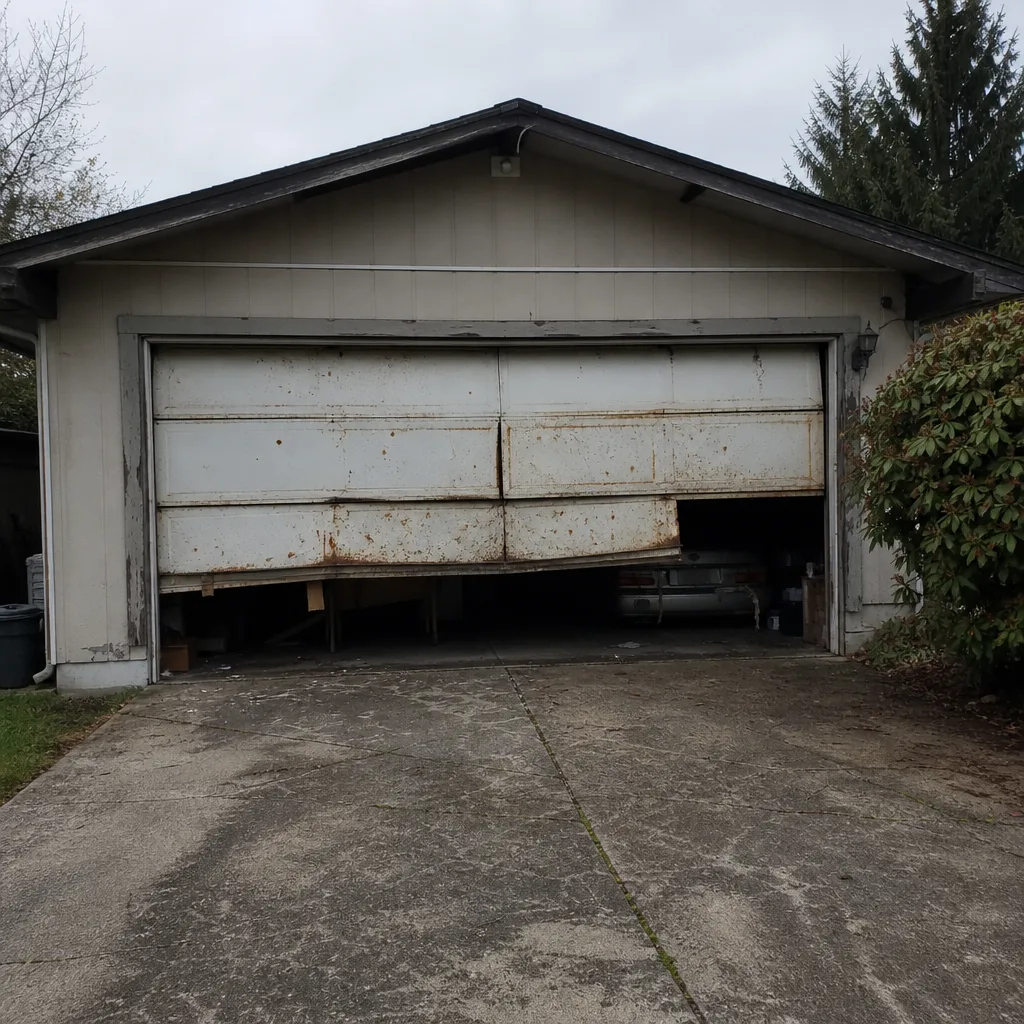 Before
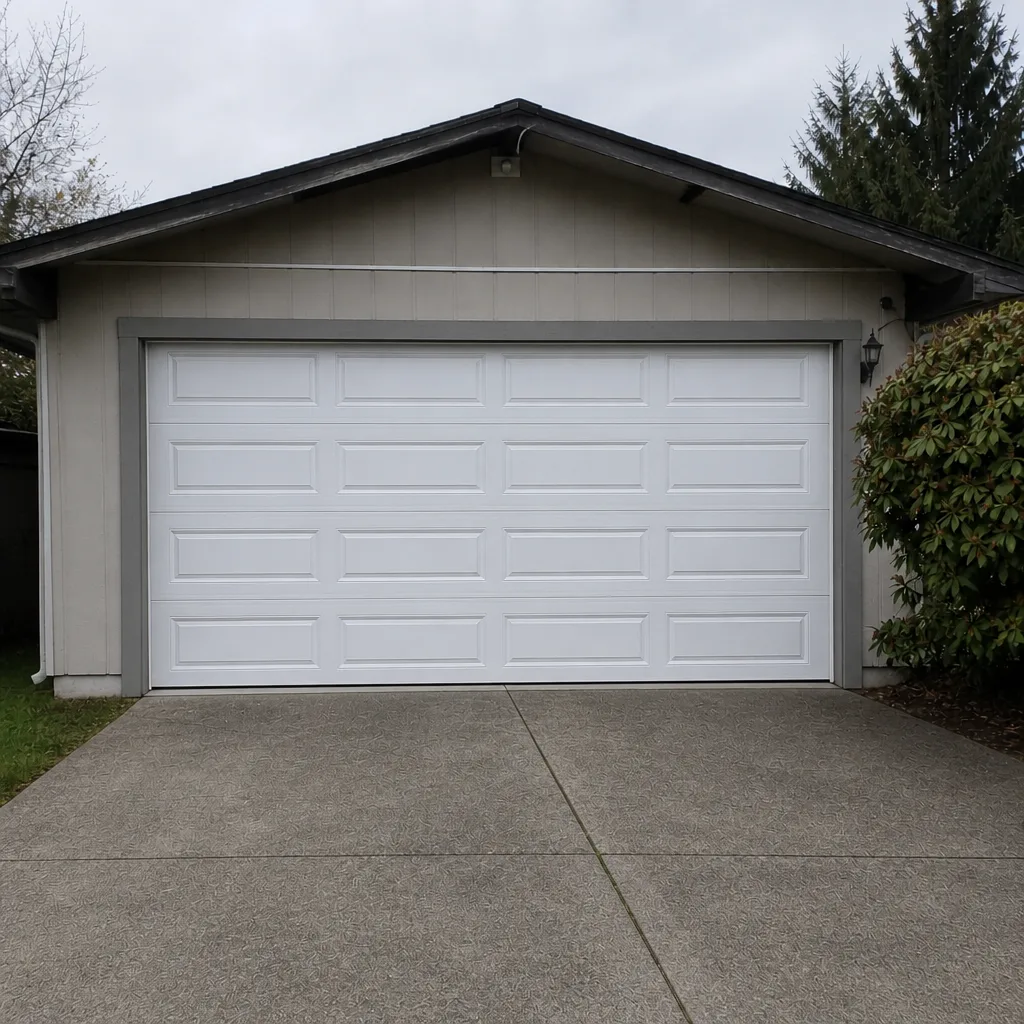 After
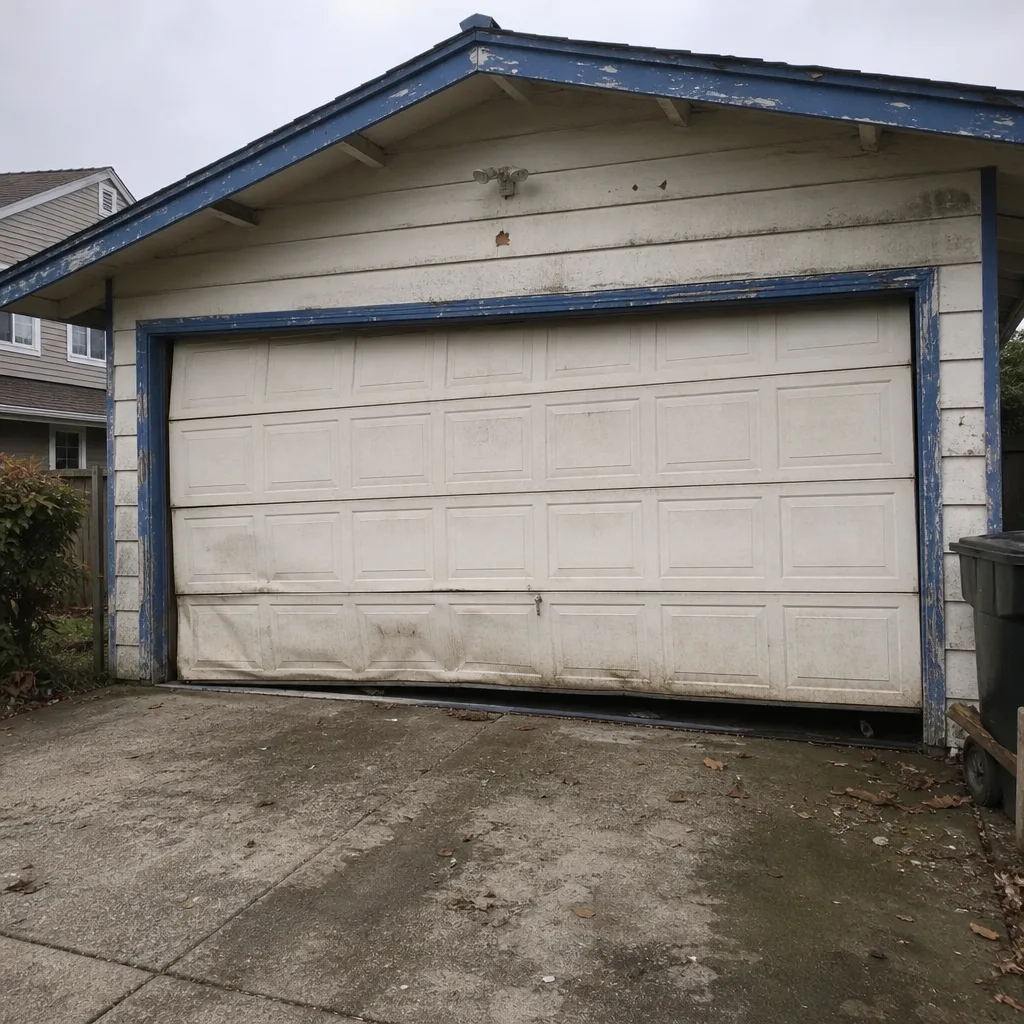 Before
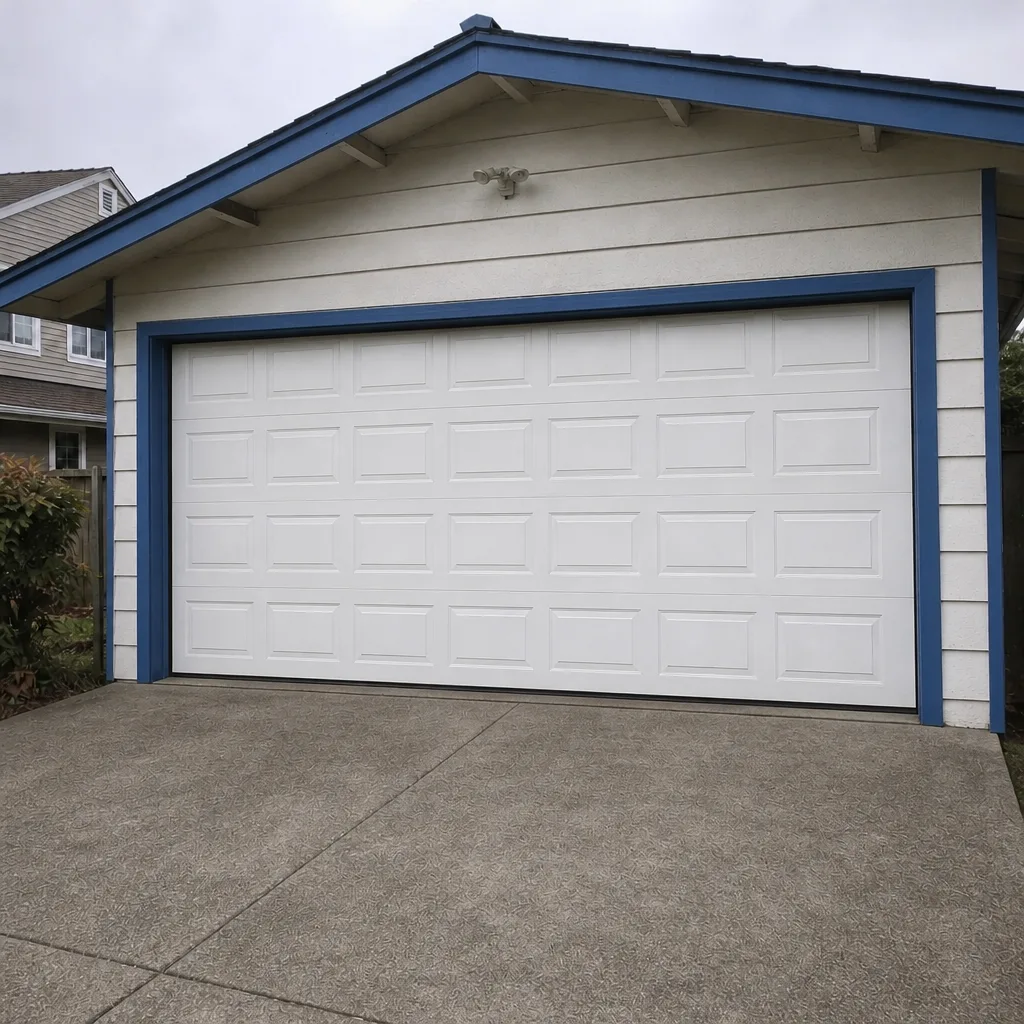 After
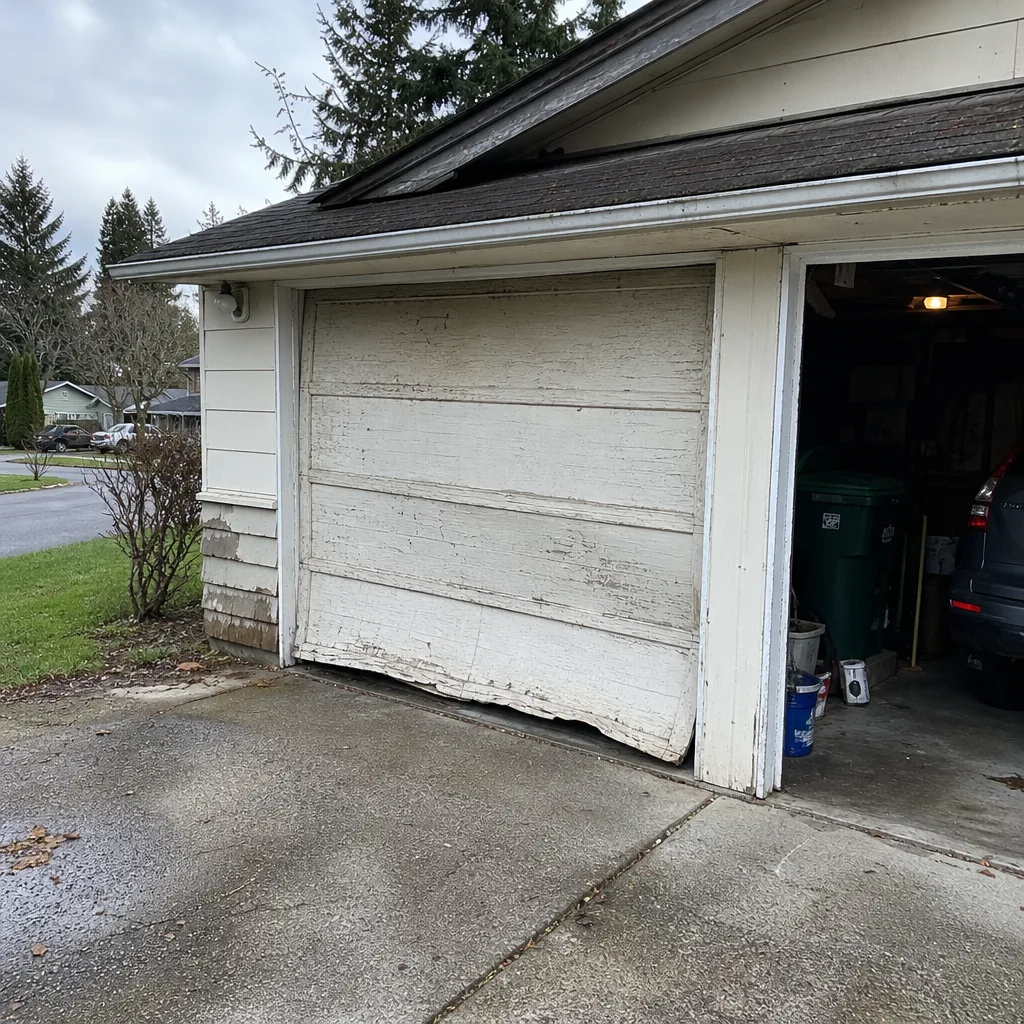 Before
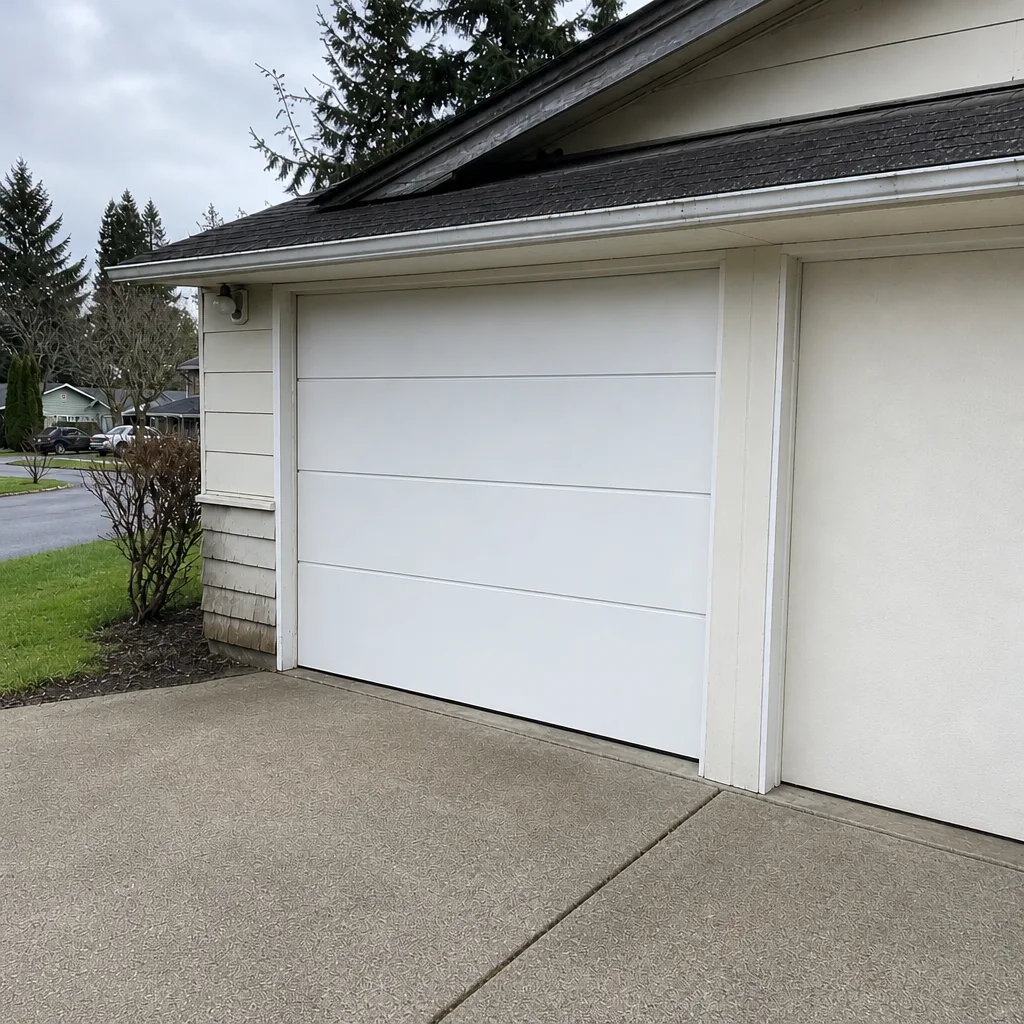 After
When to Call a Professional
Some garage door work is safe to inspect and some isn’t. A door that won’t open, a spring that’s visibly broken, a cable that’s come loose, an opener that’s stopped responding, or a door that’s come off its tracks all point to a professional visit. Springs and cables are the safety-critical parts, and they’re under high tension. Don’t attempt to remove, adjust, or re-tension them yourself. Electrical work for an opener should also go to a licensed electrician. Our technicians have up to 10 years of experience and are licensed and insured. We answer 24/7, with fast dispatch from 7am to 7pm, Sunday through Friday. If your door is stuck or unsafe, Oasis Garage Door Repair can help. For an exact quote on a repair or a full installation, call (833) 427-9172. Estimates are free, and your written quote is agreed before any work starts.
Frequently Asked Questions
Replacement in Everett typically runs $1,200 to $2,800 for a single-car door installed, and $2,200 to $4,500 for a double. The range reflects material, insulation, and brand tier. Your written estimate after a free on-site measure sets the exact price. Call (833) 427-9172 for an exact quote, or to schedule the measure.
Yes, a broken spring repair is one of the most common same-day calls we handle, and a single spring repair typically costs $180 to $340. A matched pair is usually replaced together, so budget about twice that when both springs are involved. Call (833) 427-9172 to book a same-day visit if your door is stuck. We answer 24/7, with fast dispatch from 7am to 7pm, Sunday through Friday.
No, not after the written estimate is agreed. The free on-site measure is where we check the header, the opening, the opener compatibility, and the surrounding framing. Once the written quote is prepared and agreed, that number is the price. If something unexpected turns up mid-install, we stop and re-quote before proceeding. Call (833) 427-9172 to book a free measure.
Yes, the technicians who arrive are licensed and insured, and they have up to 10 years of experience on residential systems. Our team connects homeowners with independent local professionals who perform the work, and they’re fluent in the major brands: LiftMaster, Chamberlain, Genie, Clopay, Amarr, Wayne Dalton, Craftsman, and Raynor. Call (833) 427-9172 for service.
Repair usually wins if the door itself is sound: one broken spring, a loose cable, or a worn roller is a repair, not a replacement. Replacement starts to make sense when multiple panels are damaged, the hardware is worn throughout, or the repair total approaches half the cost of a new door. Call (833) 427-9172 for an assessment in Everett, and we’ll tell you which way the math points.
Yes. Older doors still work on the same mechanical principles as newer ones: springs, cables, tracks, rollers, and an opener. That’s why a technician who knows the common brands (Craftsman, Wayne Dalton, Amarr, Raynor among them) can diagnose and repair an older door without a learning curve. Call (833) 427-9172 to schedule a visit in Everett.
The Bottom Line
The numbers matter less than the structure behind them. A single-car replacement in Everett runs $1,200 to $2,800 installed, a double lands between $2,200 and $4,500, and a repair is usually $180 to $420 depending on what failed. Every quote you receive should show panels, springs, cables, opener, tracks, and labor separately, and it should name what’s excluded. The written estimate from the on-site measure is the number you’re agreeing to, and it doesn’t change after you sign it. If you get those three things right, you can read any quote honestly and stop guessing at the total.
If you’re ready for a free measure and a line-item estimate in Everett, call (833) 427-9172. We answer 24/7, with fast dispatch from 7am to 7pm, Sunday through Friday. Your brand, our expertise, backed by a written price that’s agreed before any work starts.
Written by the team at Oasis Garage Door Repair.