
Last updated November 15, 2026
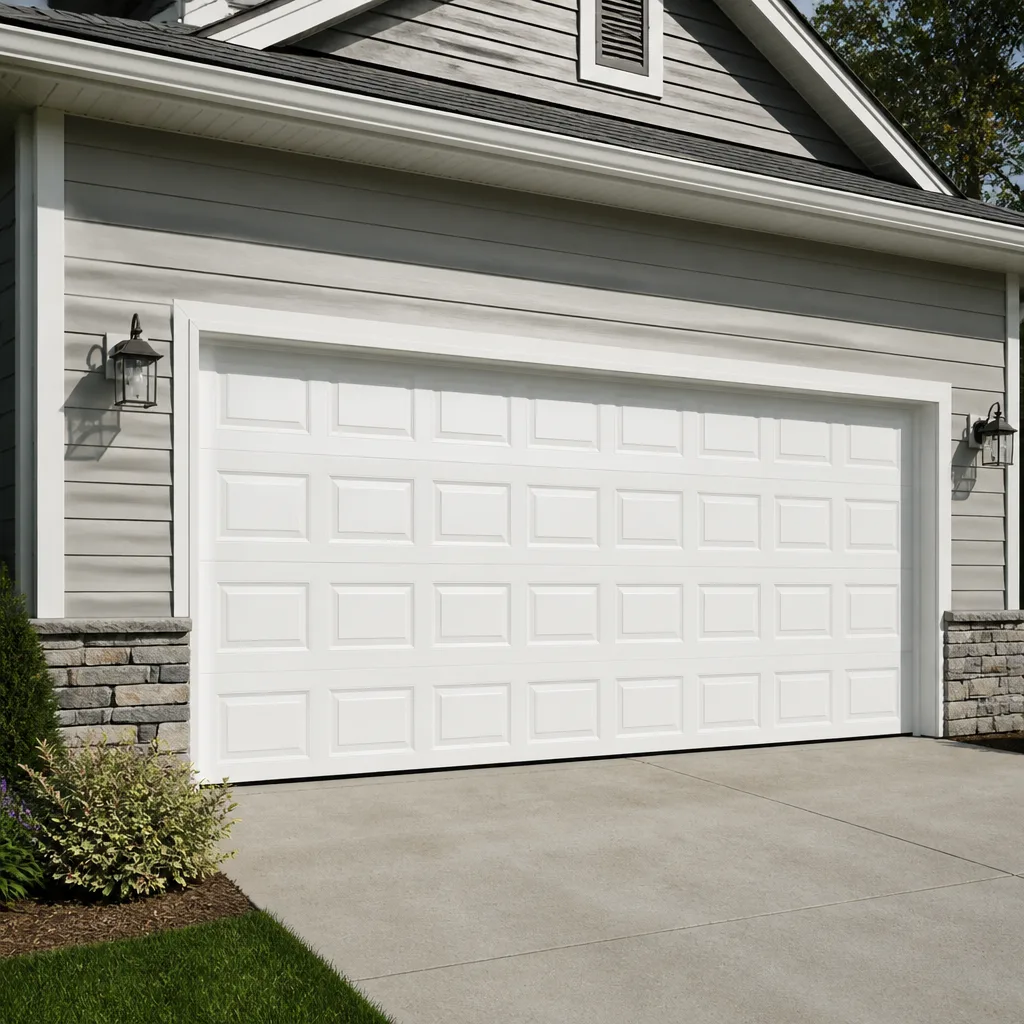 Raised-panel steel
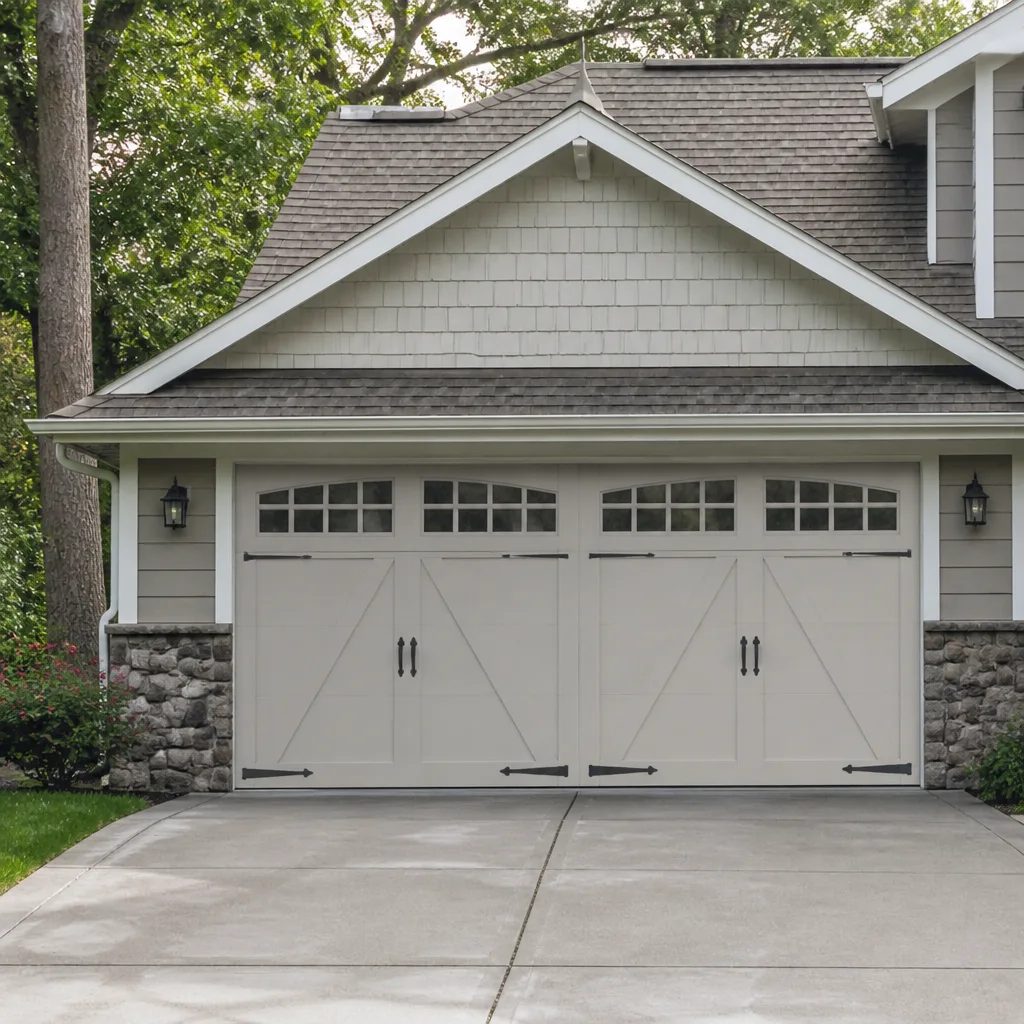 Carriage house
 Modern flush
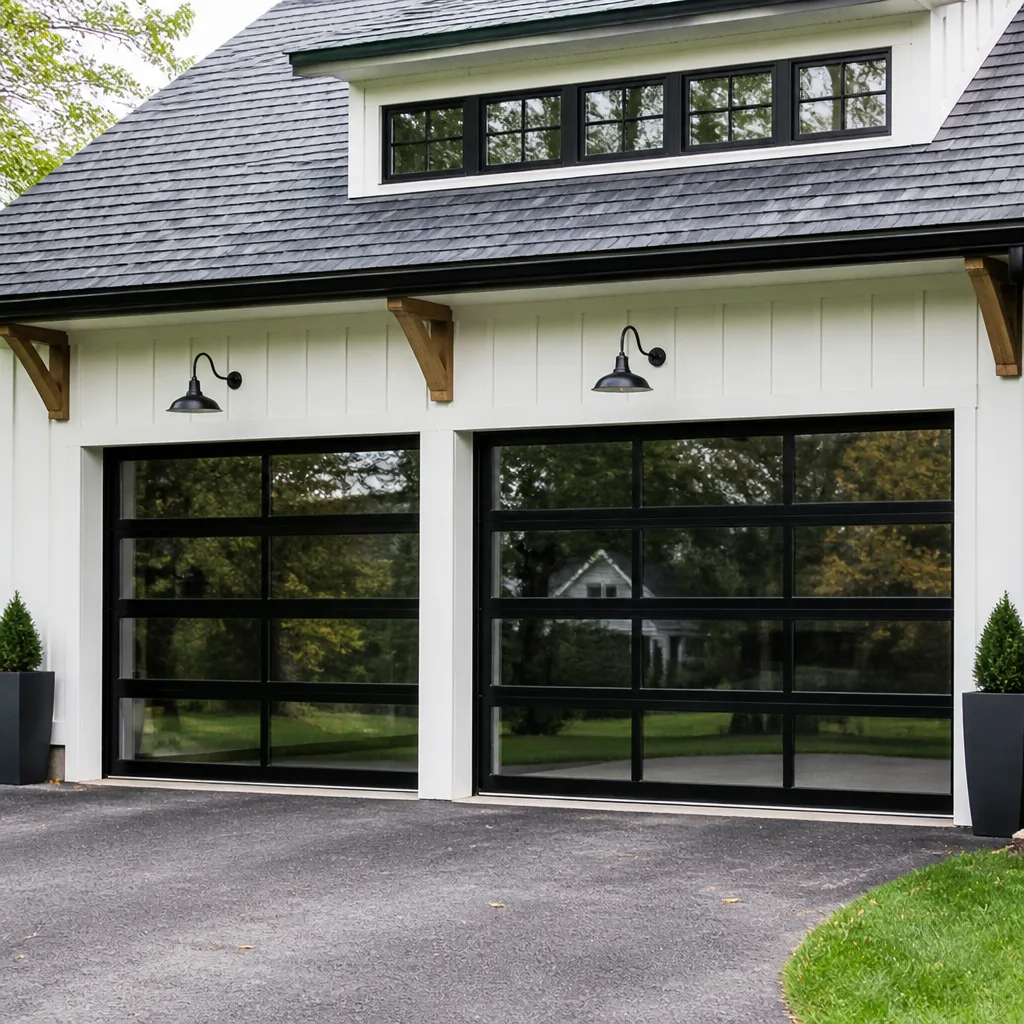 Full-view glass
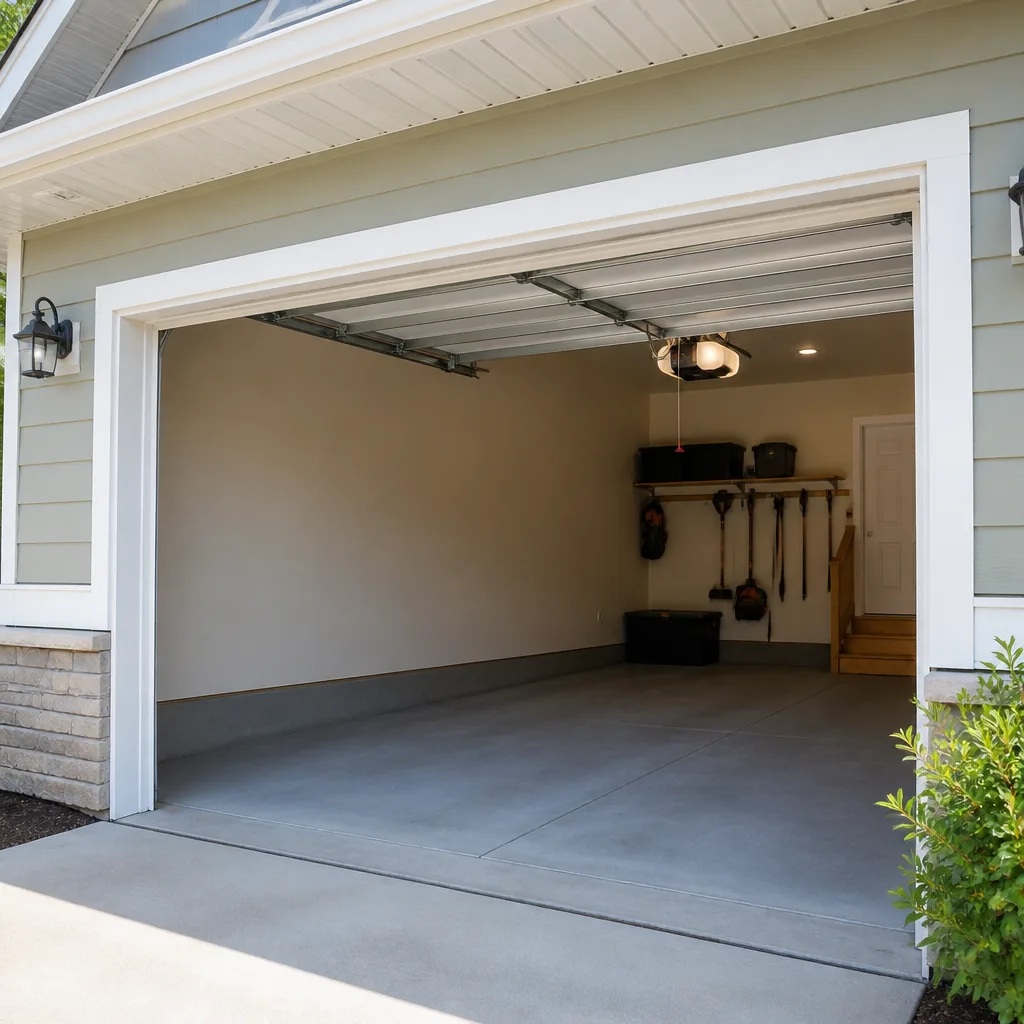 LiftMaster openers
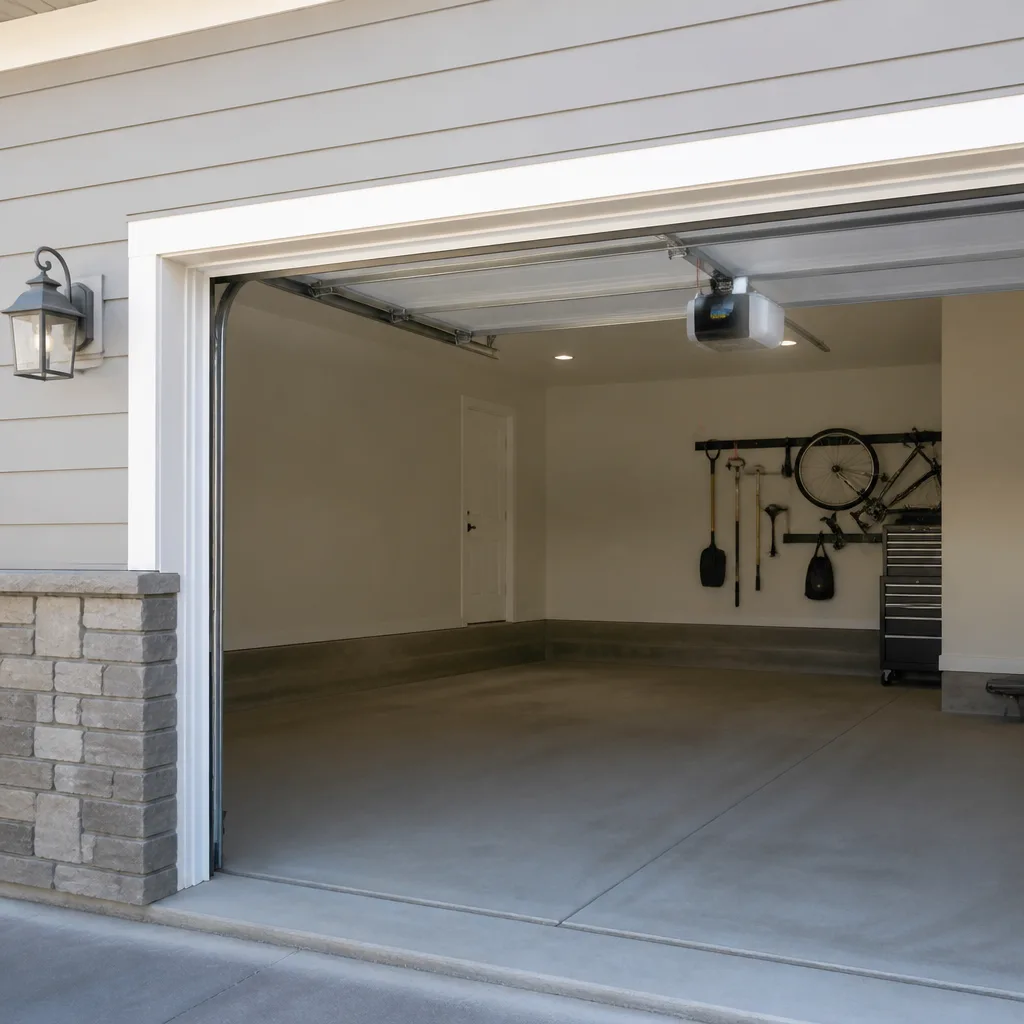 Chamberlain openers
Full 25-point door and opener safety check with every visit - springs, cables, rollers, tracks, and your LiftMaster or Chamberlain opener included
You get a price before we start. It does not change when the pro arrives.
Get your free estimateHow to Hire a Garage Door Contractor in Everett: A Step-by-Step Guide
Most homeowners hire a garage door contractor the way they hire a plumber: something breaks, they call the first company that answers. That approach works for a clogged drain. It fails for garage doors, because the equipment in your garage is more specific than you think. Openers run on proprietary circuit boards. Springs are matched to door weight and track geometry. A technician who only carries one brand’s parts will recommend that brand whether or not it fits your door. This guide walks you through a vetting process built for garage doors specifically, from the five red flags that matter most to the questions that expose whether a quote is honest. You’ll learn how to hire well in Everett.
Quick Answer
Hiring a garage door contractor in Everett comes down to five steps: verify the company is licensed and bonded in Washington State, confirm it services multiple brands rather than one, ask for a line-item written quote before work starts, check that the quote separates parts from labor, and get a labor warranty in writing. A contractor who can service your existing brand without waiting on a special order will save you time and money, and one who pressures you toward replacement before diagnosing the problem is usually selling rather than repairing.
Styles & brands we work with
- Raised-panel steel
- Carriage house
- Modern flush
- Full-view glass
- LiftMaster openers
- Chamberlain openers
Table of Contents
- The Five Red Flags in Garage Door Contractors
- What “Licensed and Bonded” Actually Means in Washington State
- Why Single-Brand Contractors Cost You More
- How to Read a Garage Door Quote
- Questions That Reveal Real Diagnostic Ability
- Why Three Quotes Work Differently for Repair vs. Replacement
- What a Professional Garage Door Visit Looks Like
- Common Mistakes to Avoid
The Five Red Flags in Garage Door Contractors
A contractor who only works with one brand of opener isn’t really a garage door specialist. They’re a brand representative, and their recommendations reflect that. In Everett, where the housing stock ranges from older homes with heavy solid-wood doors to newer construction with insulated steel panels and belt-drive openers, brand flexibility matters. These five red flags should make you pause before booking.
- No physical address. A legitimate contractor has a verifiable business address you can look up. A company that only lists a phone number and a PO box may be a lead-generation operation that subcontracts every job to whoever is available. You’ll pay a markup for a middleman and have no clear avenue if something goes wrong.
- Single-brand dependency. If every recommendation lands on one manufacturer regardless of what you already own, the contractor either stocks only that brand or gets a spiff for pushing it. A capable multi-brand specialist works with what’s on your door, whether that’s a Chamberlain opener, a Genie motor, or a Clopay door panel.
- Vague labor warranties. Parts warranties come from the manufacturer and are usually clear. Labor warranties come from the contractor and are often buried in fine print or missing entirely. Ask specifically how long the labor is covered and what voids it.
- No mention of parts sourcing. When you ask where the replacement spring or opener comes from, a genuine contractor can tell you. A reseller who orders parts on demand often can’t give you a brand or a timeline because they don’t know until they order.
- Pressure to replace, not repair. If a technician walks in and immediately recommends a full replacement without diagnosing the actual failure, that’s a sales call, not a service call. Most doors that won’t open have a repairable cause: a broken spring, a misaligned track, a failed opener capacitor. Replacement is sometimes the right answer, but it should follow a diagnosis, not replace one.
None of these red flags is a dealbreaker on its own. Together, though, they point to a company that’s optimized for sales volume rather than repair quality. For garage door work in Everett, the stakes are higher than most home repairs because the door is a primary entry point for many households.
What “Licensed and Bonded” Actually Means in Washington State
In Washington State, general and specialty contractors must be registered with the Department of Labor & Industries (L&I). That registration is what most people mean when they say “licensed.” The registration covers bonding and insurance requirements, and it’s verifiable through the L&I website. When a contractor says they’re “licensed and bonded,” that’s the system they’re referencing.
Here’s what to check:
- Active L&I registration. You can look up any contractor’s registration status on the state L&I site. The registration should be current, not expired or suspended.
- Bond in place. The bond is a form of financial protection if the contractor fails to complete the work or violates contract terms. It’s not a guarantee of quality, but it’s a baseline consumer protection.
- Liability insurance. Ask for a certificate of insurance. If a technician damages your door, track, or the framing around it, you want the contractor’s insurance to cover it, not your homeowner’s policy.
- Workers’ compensation. If the contractor has employees, they should be covered under workers’ comp. If a worker is injured on your property and isn’t covered, the liability can come back to you.
For garage door work specifically, the practical question is whether the company carries the right coverage for the type of job. Spring replacement involves stored tension that can cause serious injury if handled wrong, and opener electrical work involves low-voltage wiring and sometimes high-voltage connections. A contractor who can’t produce proof of insurance for this kind of work isn’t a safe choice, regardless of price. When in doubt, ask the Everett building department whether a permit is required for the specific job you’re having done; most repair work doesn’t need one, but full replacements sometimes do.
Why Single-Brand Contractors Cost You More
A single-brand contractor isn’t necessarily dishonest. They may have a genuine relationship with one manufacturer and know that product line deeply. The problem is what happens when your door or opener isn’t that brand. You get one of three outcomes: they decline the job, they recommend replacing your working equipment with their brand, or they attempt the repair without the right parts and diagnostic experience.
In Everett, the housing stock makes this a real issue. Homes built in different decades carry different equipment. A 1990s build might have a Craftsman opener and a Wayne Dalton door. A newer construction home might have a LiftMaster with MyQ smart-home integration and a Clopay insulated door. A contractor who works primarily with one brand will be fluent on some of these and learning on others.
What to look for instead:
- Brand breadth in the service description. A multi-brand specialist will name the brands they service. We work on LiftMaster, Chamberlain, Genie, Clopay, Amarr, Wayne Dalton, Craftsman, and Raynor, and we don’t claim expertise beyond that list.
- Willingness to diagnose before recommending. Ask what the diagnostic process looks like. A capable technician can describe how they’d test a motor, check spring tension, and inspect the track without defaulting to “we’ll replace the whole unit.”
- Opener-specific knowledge. Openers are their own category. Motor issues, remote pairing problems, safety sensor misalignment, and smart-home integration failures are all separate from the door itself. A contractor who treats opener repair as an afterthought will struggle with the electronics side.
The practical effect of brand flexibility is simple: fewer special orders, faster diagnosis, and recommendations that reflect your door rather than the contractor’s inventory. That’s the difference between a repair and an upsell. If you need garage door opener repair, the technician’s familiarity with your specific opener brand is often the difference between a one-visit fix and a return trip.
How to Read a Garage Door Quote
The single most useful skill in hiring a garage door contractor is reading a quote. A line-item quote tells you what you’re paying for. A lump-sum quote hides the markup and makes it impossible to compare offers. Here’s what separates the two.
A line-item quote includes:
- Parts, named specifically (brand, model or part number where applicable)
- Labor, priced separately from parts
- Any disposal or haul-away charges
- Permit costs, if a permit is required
- The labor warranty term, stated in writing
- The total, with tax shown separately
A lump-sum quote includes:
- A single number for the whole job
- No breakdown of parts vs. labor
- No indication of which brand or grade of parts will be used
- Warranty terms in fine print or not at all
The lump-sum quote isn’t automatically a bad deal, but it’s harder to evaluate. If two contractors both quote a spring replacement and one is $80 higher, you can’t tell from a lump sum whether the difference is labor rate, spring grade, or warranty coverage. With line items, you can compare directly.
Ask for the quote in writing before any work starts. A contractor who quotes on-site and then adjusts the price after the door is apart has given you a number that wasn’t a quote. The written estimate should set the final price; if the technician finds something the quote didn’t cover, they should stop and re-quote before proceeding, not surprise you at the end. That standard applies across repair, opener service, and garage door repair in general.
One more thing on springs: the price for a single spring is not the price for a pair. Most residential doors use two springs, and they’re usually replaced together because a matched pair fails around the same time. If a quote gives you one number for “springs” without telling you whether that’s one or two, ask before you compare it to another quote.
Questions That Reveal Real Diagnostic Ability
The difference between a technician and a salesperson is what happens when you ask a question the script doesn’t cover. Here are the questions worth asking on the phone or during the estimate.
- “What would you check first if my door opens a few inches and stops?” A technician will describe a sequence: spring tension, track alignment, opener force settings, safety sensor alignment. A salesperson will say “sounds like you need a new opener” before asking anything else.
- “Can you tell me what brand of opener I have from a description?” Most experienced technicians can narrow it down by asking about the housing shape, the number of buttons on the remote, and whether there’s a battery backup. This is brand fluency in action, not a script.
- “Do you repair openers, or only replace them?” Opener repair is a real category, separate from door repair. Motors, logic boards, capacitors, travel limits, and remote pairing issues are all repairable. A company that only installs openers is telling you the answer before you ask.
- “What’s your labor warranty?” A contractor with confidence in their work will state a term without hedging. A vague answer (“we stand behind our work”) means you have no defined recourse.
- “How do you source parts?” The answer should include brand names and a rough timeline for anything not standard. If the answer is “we’ll figure it out when we get there,” that’s a red flag.
These questions are also useful during the estimate itself. If the technician walks in and immediately recommends replacement without going through the diagnostic sequence, you’ve learned what kind of company you called. If they walk in, test the door, listen to the opener, and then explain what they found, you’ve found a repair-first contractor. That distinction is the whole ballgame in Everett, where most homes have equipment that’s worth repairing rather than replacing.
Why Three Quotes Work Differently for Repair vs. Replacement
Getting three quotes is standard advice, but the advice doesn’t account for how different repair and replacement jobs are. For a repair, three quotes are less useful than one good diagnosis. For a replacement, three quotes are essential, because the variables (door brand, insulation rating, window options, opener compatibility) are numerous and the price range is wide.
For repair jobs, prioritize diagnosis over price comparison. A broken spring, a door off track, or an opener that won’t respond is usually a one-visit fix with a narrow price range. The variation between contractors is mostly labor rate and parts grade, and both are visible in a line-item quote. What matters more is whether the contractor diagnosed the actual cause. If you call three companies and get three different diagnoses, that’s a signal to ask more questions, not to pick the cheapest one.
For replacement jobs, get three written line-item quotes. The variables are real: door material, insulation, window inserts, hardware, opener compatibility, and installation complexity. A quote that doesn’t specify the door brand, model, and insulation value is not comparable to one that does. And where repair work can often be done the same day, replacement is measured, ordered, and scheduled. A replacement quote should include a measure appointment, a written price, and an installation date, not a promise of same-day service.
For springs and cables specifically, three quotes are usually unnecessary. These are standardized repairs with a narrow price band, and the diagnosis matters more than the bid. For a full replacement, three quotes are the minimum. That’s the practical split, and it holds across Everett’s neighborhoods, from the older homes near downtown to the newer construction on the city’s edges.
What a Professional Garage Door Visit Looks Like
A professional visit follows a predictable sequence. Knowing what to expect helps you spot a company that’s cutting corners.
- Arrival and walkthrough. The technician looks at the door, the track, the opener, and the surrounding framing before touching anything. They ask what’s been happening: does it stick at a certain point, does the opener run but the door doesn’t move, does it reverse on its own.
- Diagnostic testing. The technician tests the door manually with the opener disengaged, checks spring tension, inspects the track for bends or misalignment, and tests the opener’s force and travel limits. This is where a repair-first contractor separates from a replacement-first one.
- Written quote before work. The technician explains what they found and quotes the repair in writing. You approve before any work starts. If the diagnosis changes mid-repair, they stop and re-quote.
- Repair or installation. The work is done, the door is tested through several full cycles, and the safety reverse is checked.
- Cleanup and walkthrough. The technician explains what was replaced, confirms the warranty terms, and leaves the work area clean.
This sequence applies to both repair and installation, with the difference that installation involves a measure appointment first and a scheduled install date. If you’re planning a new door, we can walk you through that process as part of a free estimate. For an overview of our services, see Oasis Garage Door Repair, and for a look at how we handle work in the area, see Everett.
Common Mistakes to Avoid
- Hiring based on the first phone call. The company that answers fastest isn’t necessarily the most capable. Ask the diagnostic questions in this guide before you book, even if it takes an extra call.
- Accepting a verbal quote. A verbal number isn’t a quote. Get it in writing, with parts and labor separated, before any work starts.
- Assuming springs are priced as a pair. Most doors have two springs and they’re usually replaced together. If a quote doesn’t specify one or two, ask. Otherwise you’re comparing a single spring to a pair and the numbers don’t mean what they appear to.
- Replacing an opener when the problem is the door. A door that’s hard to lift, sticks at a point, or reverses immediately is often a spring, track, or alignment issue, not a motor failure. Diagnosis first, replacement second.
- Ignoring the labor warranty. The parts warranty is from the manufacturer. The labor warranty is from the contractor, and it’s the one that covers you if the repair fails. If it’s not in writing, you don’t have it.
- Choosing a single-brand contractor for your existing equipment. If your opener is a Genie and the contractor works mainly with LiftMaster, you’re paying for a learning curve. Brand fluency matters for a fast, correct repair.
- Skipping the insurance check. Spring tension and track work carry real injury risk. Ask for proof of insurance before the technician starts. A company that can’t provide it shouldn’t be working on your door.
None of these mistakes is unusual. They’re common because garage door repair is an urgent purchase: the door breaks, you need it fixed, and you call whoever answers. Slowing down enough to ask five questions is the whole difference between a good hire and an expensive one.
See the difference
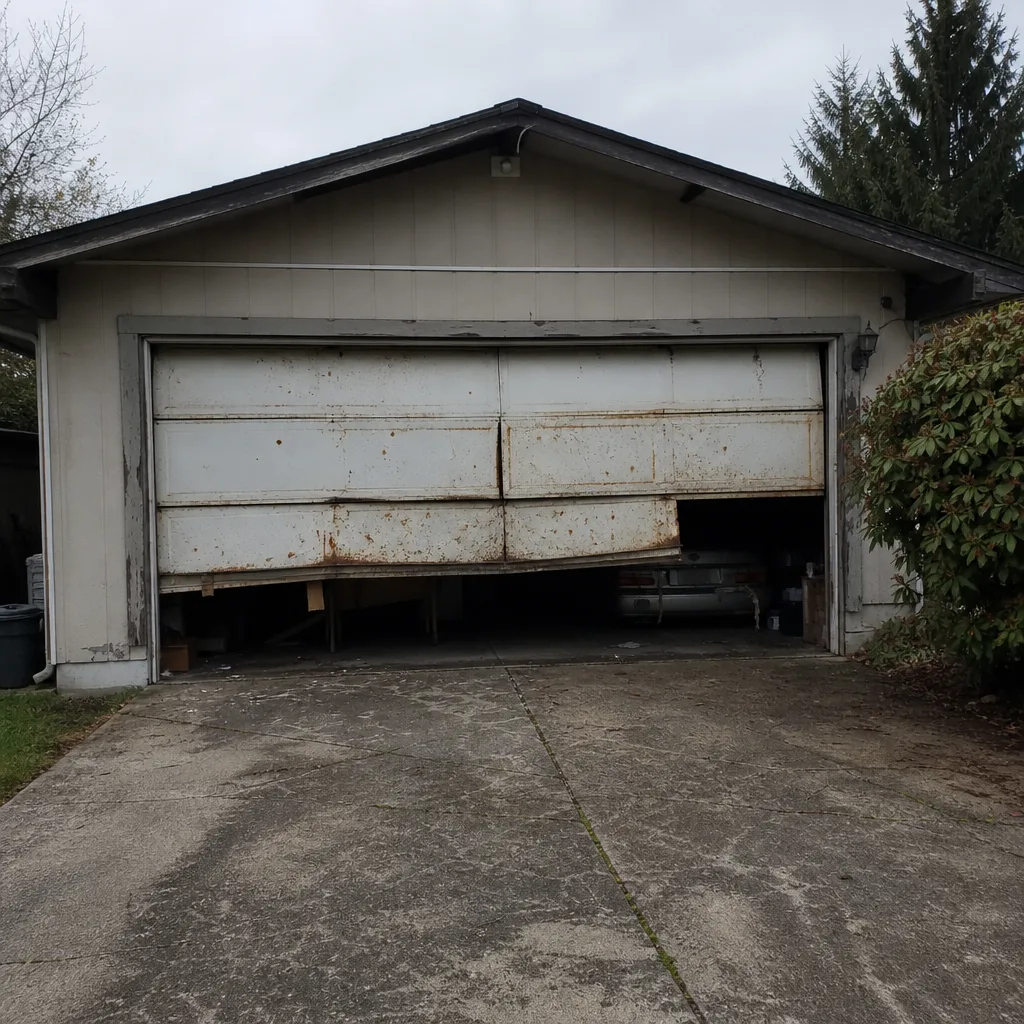 Before
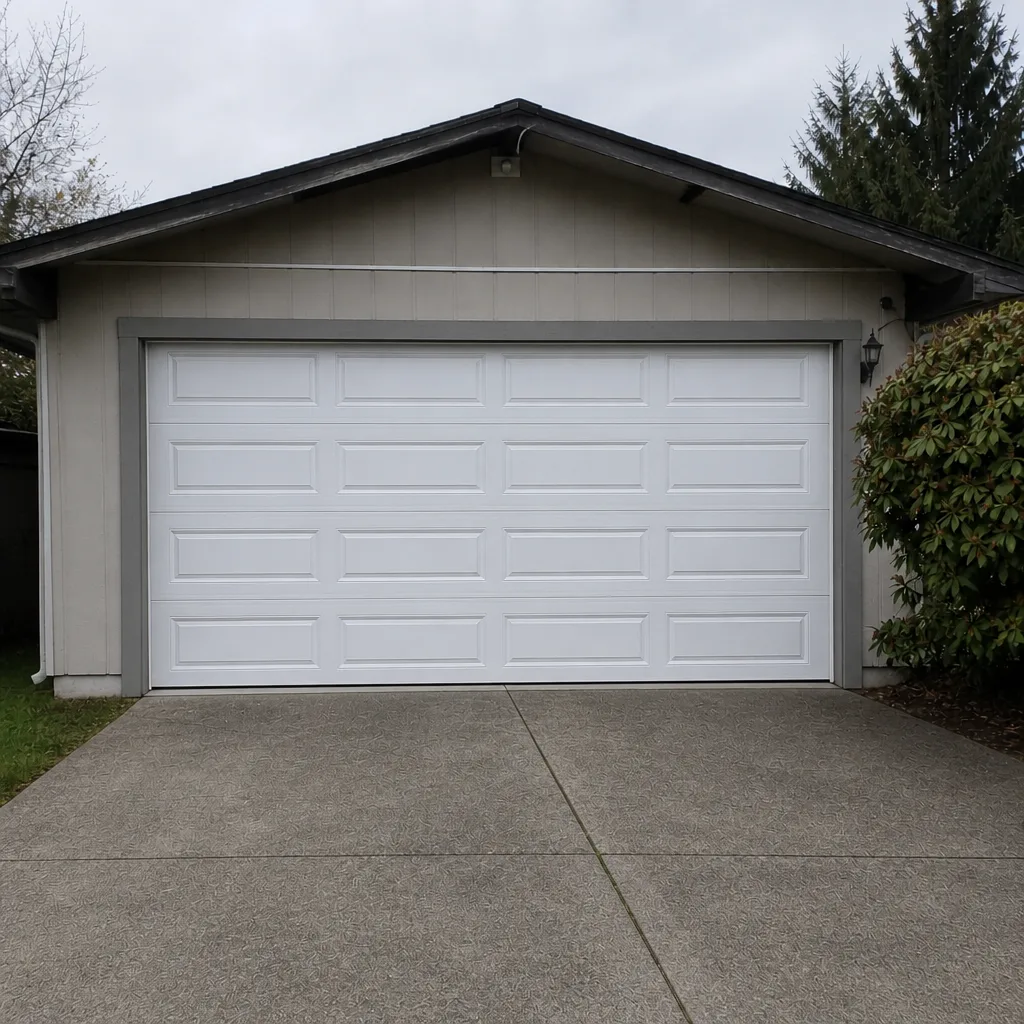 After
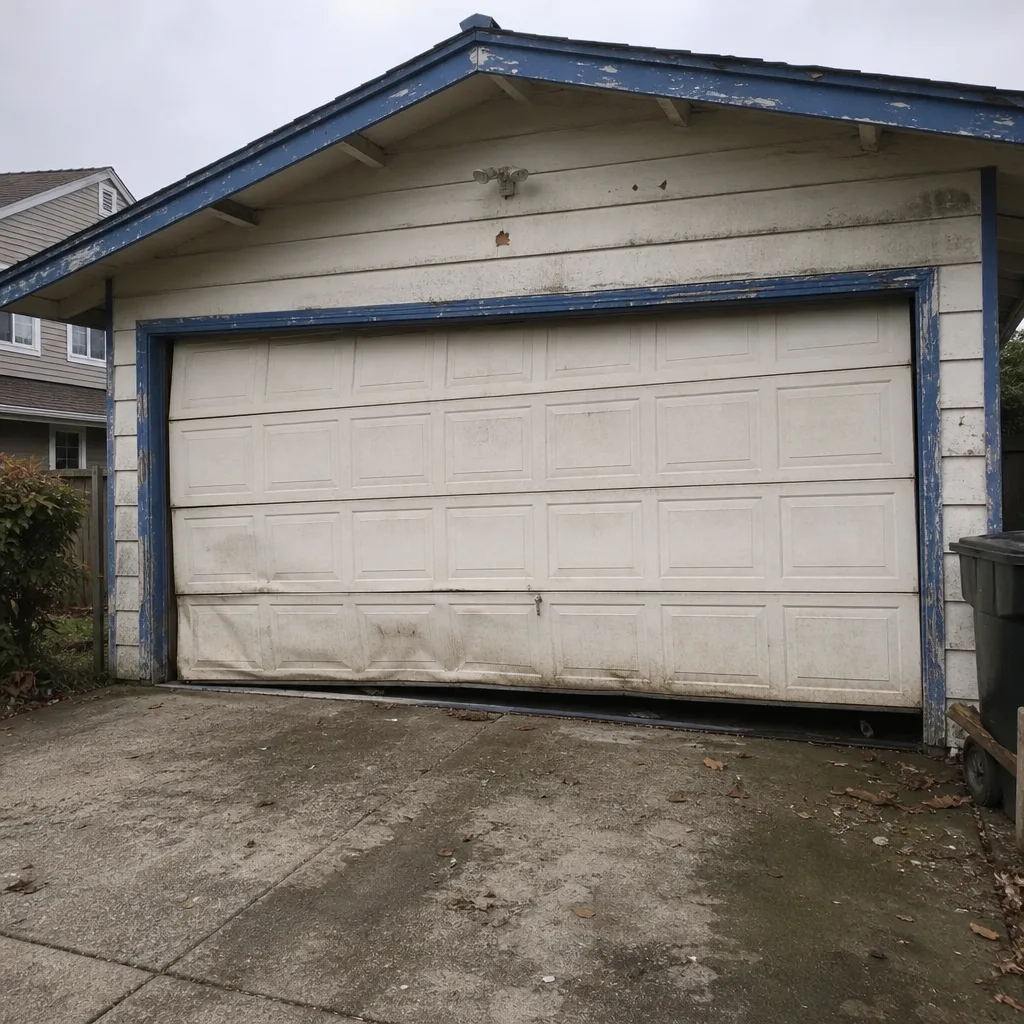 Before
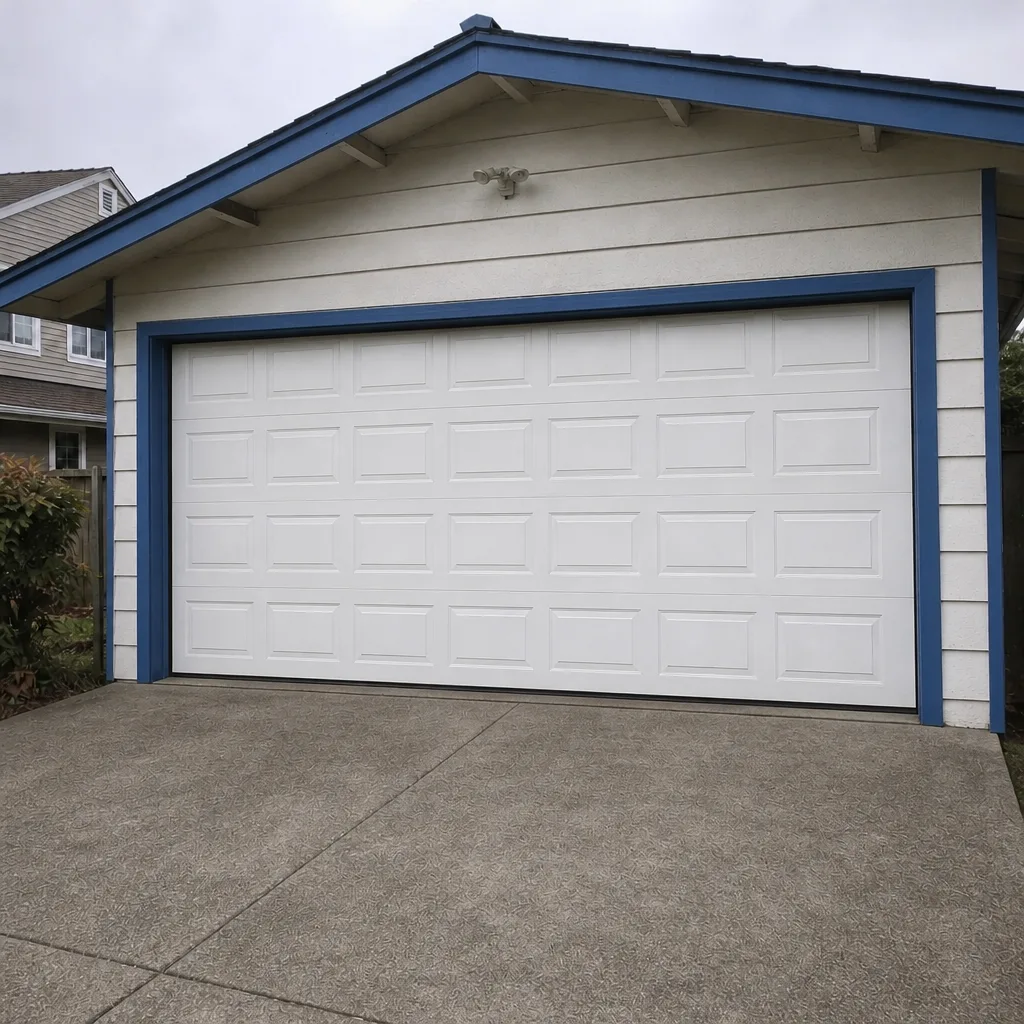 After
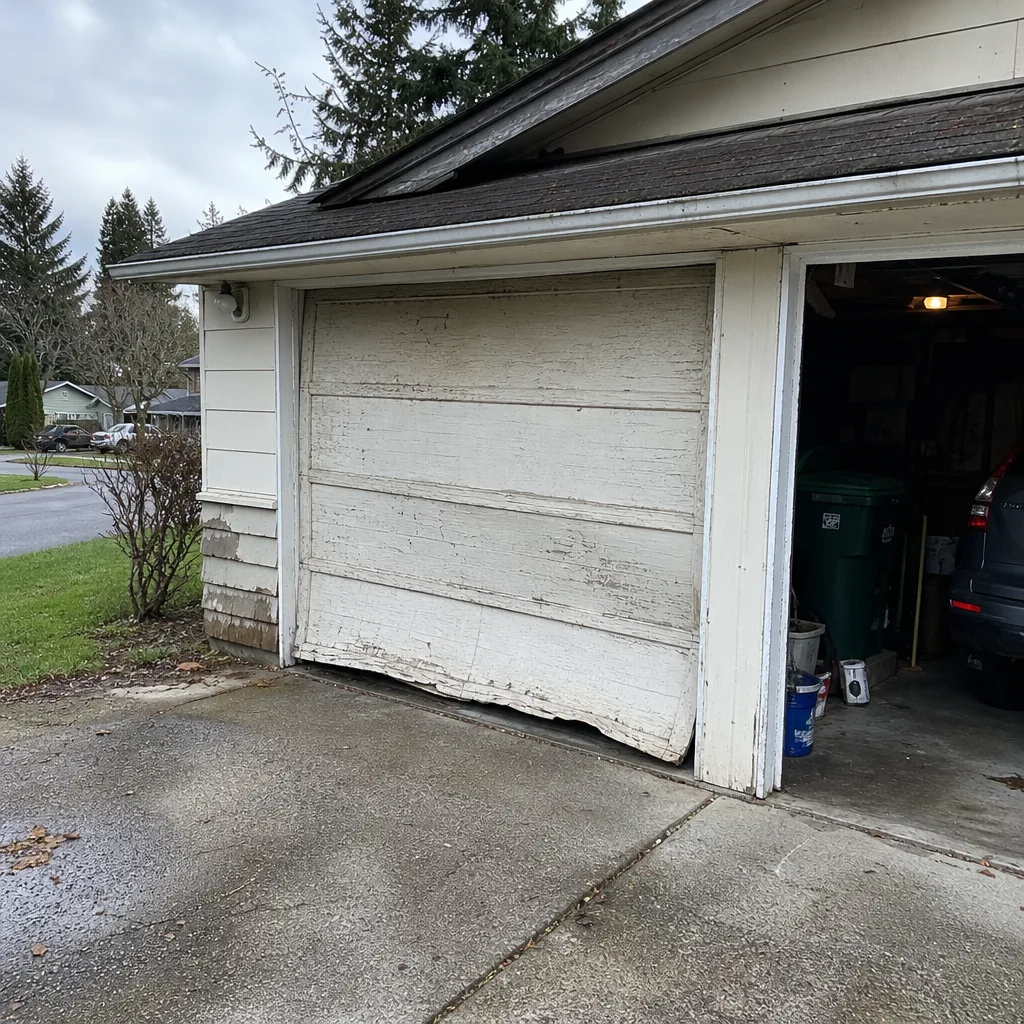 Before
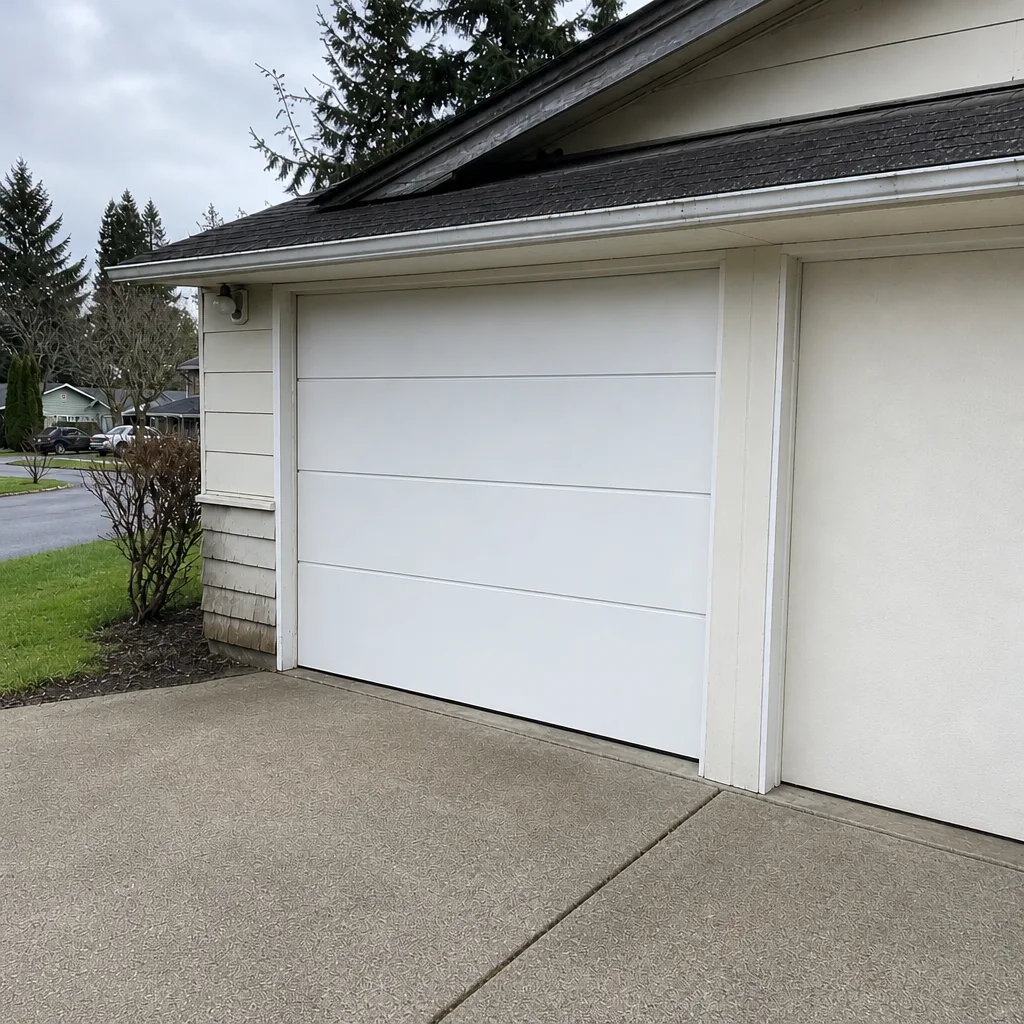 After
When to Call a Professional
Some garage door problems warrant a call. A broken spring or a snapped cable is dangerous to handle without training, because the tension stored in those components can cause serious injury. A door that’s come off its track, an opener that runs but doesn’t move the door, a door that reverses unexpectedly, or a motor that’s grinding or humming without lifting all call for a trained technician.
If you need help with opener electronics, remote pairing, or smart-home integration issues, that’s a separate category, and it’s worth calling a company that treats opener repair as its own specialty rather than an add-on. Same-day service is often available for repair calls.
We’ve seen all of these before, and we can tell you what’s likely wrong and what it’ll take to fix it. Our technicians have up to 10 years of experience. Oasis Garage Door Repair offers free estimates in Everett. Call (833) 427-9172. We answer 24/7. Fast dispatch from 7am to 7pm, Sunday through Friday.
Frequently Asked Questions
Look up the contractor’s registration on the Washington State Department of Labor & Industries website. The listing should show an active registration, a bond in place, and insurance coverage. Ask for a certificate of insurance showing liability coverage, and confirm workers’ compensation if the company has employees. A contractor who can’t produce these documents isn’t a safe hire. If you have a question about a specific job, the Everett building department can tell you whether a permit is required. Call (833) 427-9172 for a free estimate from our team.
For most repair jobs, one good diagnosis matters more than three quotes. Springs, cables, track realignment, and opener repairs are standardized work with a narrow price band, and the main variable is the accuracy of the diagnosis. Get three line-item quotes if you’re replacing a full door, since the variables multiply. For a spring or opener repair, get a written line-item quote from a contractor you trust and compare the parts and labor breakdown to a second quote if you want confirmation. Call (833) 427-9172 for a free estimate.
Brand matters because a contractor fluent in your equipment diagnoses faster and recommends what fits your door rather than what fits their inventory. If your opener is a Genie or your door is a Clopay, a contractor who works mainly with another brand is either learning on your job or recommending a replacement. Ask which brands they service before you book. We work on LiftMaster, Chamberlain, Genie, Clopay, Amarr, Wayne Dalton, Craftsman, and Raynor. Call (833) 427-9172 to talk through your system.
A written quote should separate parts from labor, name the parts or grade where applicable, include any disposal or permit costs, state the labor warranty in writing, and show tax separately. A lump-sum quote with no breakdown is harder to compare and hides where the money goes. Get the quote in writing before work starts, and ask whether a spring quote is for one spring or a matched pair. Call (833) 427-9172 for a free written estimate.
Often, yes. Many opener problems, including remote pairing issues, safety sensor misalignment, and logic board faults, can be diagnosed and repaired in a single visit if the right parts are in stock. Same-day service is common for repair calls. Installation and full replacement are measured, ordered, and scheduled, so those aren’t same-day jobs. Call (833) 427-9172. We answer 24/7. Fast dispatch from 7am to 7pm, Sunday through Friday.
Licensed usually refers to registration with the state Department of Labor & Industries, which is required for contractors working in Washington. Bonded refers to a surety bond the contractor must carry as part of that registration; the bond is a form of financial protection if the contractor fails to complete the work or violates contract terms. Both are baseline consumer protections, not guarantees of quality. Check both, and check insurance separately. Call (833) 427-9172 for a quote from an insured contractor.
The Bottom Line
Hiring a garage door contractor in Everett is mostly about asking better questions. Check the state contractor registration and insurance. Confirm the company works on multiple brands, not one. Ask for a written, line-item quote before work starts, and confirm whether a spring price is for one or a pair. Ask what the diagnostic sequence looks like, because a technician who describes a process is a technician who follows one. And ask about the labor warranty in writing. None of this takes long. It’s the difference between a repair that lasts and a bill you didn’t expect. When you’re ready to get a quote, we’re here to help.
Oasis Garage Door Repair provides three core services in Everett: garage door repair, garage door opener repair, and new garage door installation. We work on LiftMaster, Chamberlain, Genie, Clopay, Amarr, Wayne Dalton, Craftsman, and Raynor. Estimates are free, and the price is set by the written estimate before any work begins. Call (833) 427-9172. We answer 24/7. Fast dispatch from 7am to 7pm, Sunday through Friday.
Written by the team at Oasis Garage Door Repair.